| Dimension | Minimum | Comfortable | Why |
|---|---|---|---|
| Width | 10 ft | 12–15 ft | A swing radius of ~5 ft each side; 12 ft+ lets you hit from the center |
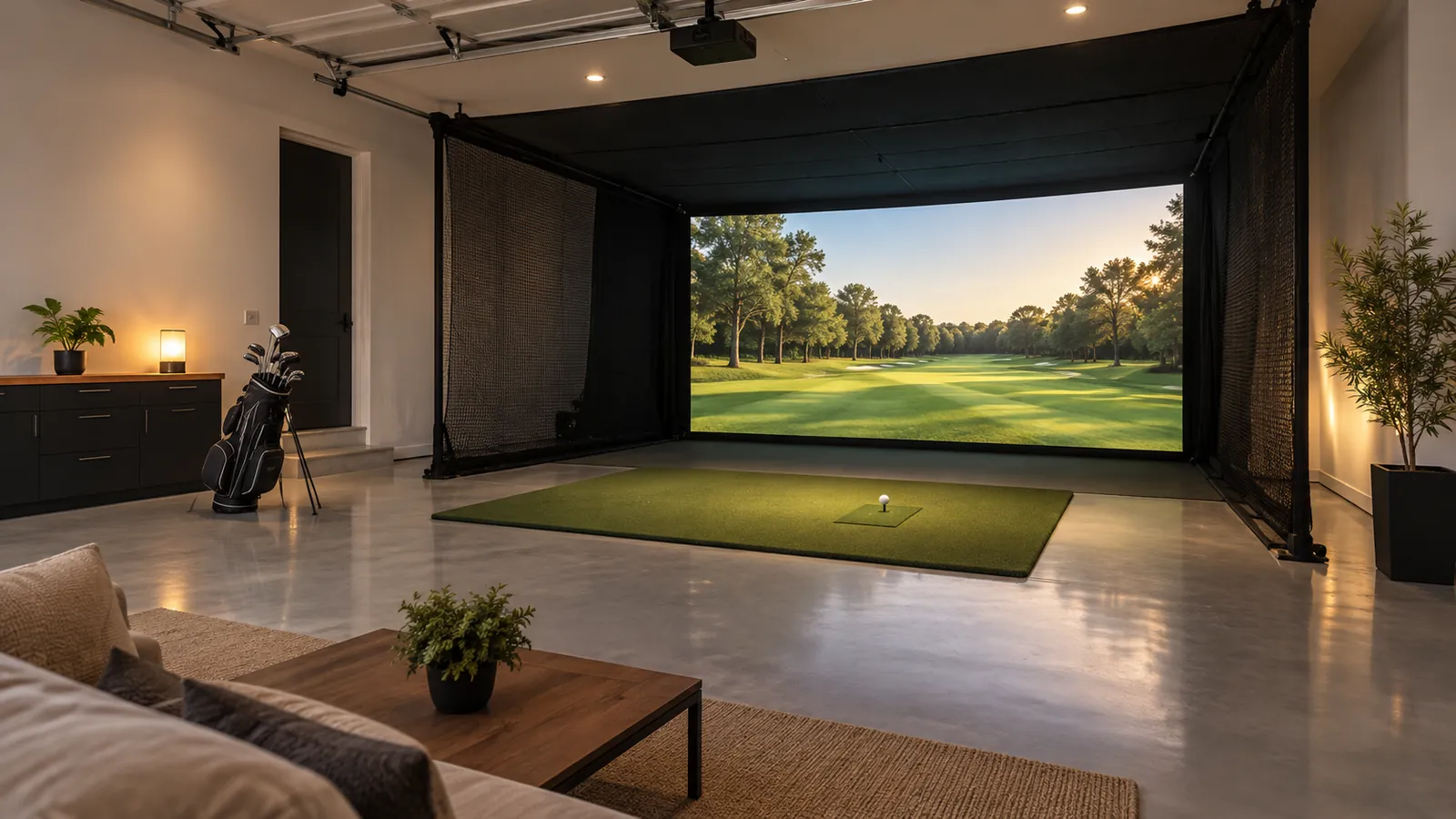
| Depth | ~15 ft (camera units) | 18–20 ft (radar behind) | Screen gap + ball-to-screen + space behind the ball |
| Height | 8.5–9 ft | 10 ft | Driver clearance (see ceiling guide) |
Depth: how it adds up
- Screen to back wall: 6–12″ so the screen can absorb impact.
- Ball to screen: ~8–10 ft. Shorter means more bounce-back, and some launch monitors need room to track ball flight.
- Behind the ball: ~5 ft of swing room for side or overhead camera units. Radar units placed behind the golfer typically need several more feet; check your unit's manual for its exact spacing.
Width and handedness
In a 10–12 ft room, offset the hitting spot so the club swings into open space. A right-hander stands closer to the left wall (viewed facing the screen). Right- and left-handed players then need different spots, and a side-mounted camera unit may need to move too.
Screen size follows the room
Leave ~6″ on each side for enclosure netting and a few inches at the top. In narrower rooms, a 4:3 or 5:4 screen gives a taller picture than 16:9 at the same width.
Check your own room in 30 seconds with the free Golf Simulator Room Fit Check.